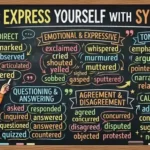
A quick answer: Synonyms for phrases include expressions, sayings, terms, clauses, word groups, and statements depending on the context.
Finding the right alternative for “phrases” can make your writing clearer, more natural, and more engaging. A student may need better wording for an essay, while a writer may want variety.
The word “phrases” refers to groups of words that express an idea, meaning, or message. For example, “break a leg” is a phrase used to wish someone good luck.
Learning different alternatives helps students, writers, bloggers, and English learners avoid repetition and communicate ideas more effectively in everyday and professional situations.
What Does Phrases Mean?
A phrase is a small group of words that work together to express a particular meaning. Unlike a complete sentence, a phrase may not always contain a subject and a verb.
Examples:
- “A piece of cake” is a phrase meaning something easy.
- “In the morning” is a phrase showing time.
- “Strong argument” is a phrase describing an idea.
The meaning of a phrase depends on how and where it is used.
Best Synonyms for Phrases
Different alternatives for “phrases” fit different situations. Some describe common expressions, while others refer to written language, groups of words, or specific terms.
1. Expressions
Meaning: Words or groups of words used to communicate an idea or feeling.
Example: The article explains common English expressions.
2. Sayings
Meaning: Short and familiar statements that often contain advice or wisdom.
Example: My grandmother often shares old sayings.
3. Terms
Meaning: Specific words or groups of words used in a particular subject.
Example: Medical terms can be difficult for beginners.
4. Clauses
Meaning: Groups of words containing a subject and a verb.
Example: The sentence contains two independent clauses.
5. Word Groups
Meaning: Several words combined to create meaning.
Example: Students learn useful word groups for speaking practice.
6. Statements
Meaning: Words arranged to express information or an idea.
Example: His statements showed confidence.
7. Words
Meaning: Individual units of language used to create meaning.
Example: Choose your words carefully.
8. Sentences
Meaning: Complete units of written or spoken communication.
Example: Short sentences improve readability.
9. Idioms
Meaning: Expressions with meanings different from the literal words.
Example: “Hit the nail on the head” is an idiom.
10. Quotes
Meaning: Exact words spoken or written by someone.
Example: The book contains famous quotes.
11. Say-So
Meaning: An informal expression or opinion.
Example: That is just his personal say-so.
12. Wording
Meaning: The particular choice and arrangement of words.
Example: The wording of the email was polite.
13. Language
Meaning: Words and expressions used to communicate.
Example: Formal language is required in academic writing.
14. Vocabulary
Meaning: The collection of words used in communication.
Example: Reading improves your vocabulary.
15. Terminology
Meaning: Specialized words used in a specific field.
Example: Legal terminology requires careful study.
16. Phrasing
Meaning: The way words are arranged to express something.
Example: Her phrasing made the message clearer.
17. Formulas
Meaning: Fixed expressions commonly used in certain situations.
Example: Business letters often use standard formulas.
18. Clichés
Meaning: Overused expressions that have become familiar.
Example: Avoid clichés in creative writing.
19. Mottos
Meaning: Short phrases expressing a belief or principle.
Example: The company motto inspires employees.
20. Slogans
Meaning: Short memorable phrases used for promotion.
Example: Brands create slogans to attract customers.
21. Catchphrases
Meaning: Famous phrases strongly associated with a person or brand.
Example: The actor became known for his catchphrase.
22. Descriptions
Meaning: Words used to explain something.
Example: The product descriptions were detailed.
23. Remarks
Meaning: Spoken or written comments.
Example: His remarks surprised everyone.
24. Comments
Meaning: Statements expressing opinions or thoughts.
Example: Readers left positive comments.
25. Messages
Meaning: Information communicated through words.
Example: The message was easy to understand.
26. Notes
Meaning: Short written pieces of information.
Example: She wrote notes during the lecture.
27. Passages
Meaning: Sections of written text.
Example: Students analyzed difficult passages.
28. Extracts
Meaning: Short parts taken from a larger text.
Example: The teacher selected extracts from the novel.
29. Snippets
Meaning: Small pieces of text or speech.
Example: The website displays text snippets.
30. Portions
Meaning: Parts of a larger piece of writing.
Example: Certain portions need editing.
31. Segments
Meaning: Separate sections of language or content.
Example: The article has several segments.
32. Components
Meaning: Individual parts that create a whole.
Example: These components form the final message.
33. Units
Meaning: Separate pieces of language or information.
Example: Vocabulary units help learners progress.
34. Forms
Meaning: Different ways of expressing something.
Example: Formal forms of communication are useful.
35. Structures
Meaning: Arrangements of words following language rules.
Example: Grammar structures improve writing.
36. Patterns
Meaning: Common arrangements of words.
Example: Learners memorize useful speech patterns.
37. Phrases
Meaning: Groups of words expressing an idea.
Example: English phrases improve communication.
38. Wordings
Meaning: Different versions of expressing an idea.
Example: The contract uses careful wordings.
39. Concepts
Meaning: Ideas represented through words.
Example: The writer explained complex concepts.
40. Ideas
Meaning: Thoughts or meanings expressed through language.
Example: Good phrases communicate ideas clearly.
41. Communications
Meaning: Messages shared between people.
Example: Clear communications prevent confusion.
42. Dialogues
Meaning: Conversations between speakers.
Example: The novel contains realistic dialogues.
43. Conversations
Meaning: Spoken exchanges between people.
Example: Daily conversations improve fluency.
44. Speeches
Meaning: Formal spoken presentations.
Example: The politician prepared powerful speeches.
45. Declarations
Meaning: Formal statements announcing something.
Example: The company issued declarations.
46. Proclamations
Meaning: Official public statements.
Example: The leader made a public proclamation.
47. Utterances
Meaning: Spoken words or statements.
Example: The linguist studied human utterances.
48. Vocalizations
Meaning: Sounds or spoken forms of communication.
Example: Researchers studied animal vocalizations.
49. Writings
Meaning: Written works or forms of expression.
Example: His writings influenced many students.
50. Wordings
Meaning: The specific way something is expressed.
Example: The wording of the phrase changed its meaning.
Context-Based Usage of Synonyms
1. Synonyms for Phrases in Formal Writing
In academic and professional writing, words like “terms,” “statements,” “wording,” and “terminology” are often more suitable because they sound precise.
2. Synonyms for Phrases in Everyday Speech
In casual conversations, “expressions,” “sayings,” “idioms,” and “catchphrases” are commonly used.
3. Synonyms for Phrases in Creative Writing
Writers often use “wording,” “expressions,” “descriptions,” and “phrasing” to create a stronger style.
Comparison Table
| Word | Meaning | Best Used For |
|---|---|---|
| Expression | A way of showing an idea or feeling | Everyday communication |
| Term | A specific word in a field | Professional writing |
| Idiom | A phrase with a special meaning | Spoken English |
| Statement | A complete message or claim | Formal communication |
| Saying | A familiar short expression | Advice and wisdom |
Related Searches
- another word for phrases
- phrases meaning and examples
- words similar to phrases
- alternatives for phrases
- different words for phrases
- synonyms of expression
- vocabulary alternatives for phrases
FAQ Section
1. What are synonyms for phrases?
Synonyms for phrases include expressions, sayings, terms, word groups, and statements.
2. Is expression the same as phrase?
An expression can be a phrase, but it usually focuses more on meaning or communication.
3. What is another word for a common phrase?
A common phrase can also be called a saying, expression, or idiom.
4. Which synonym is best for academic writing?
Terms, terminology, statements, and wording are often better choices for academic writing.
5. Why should I learn synonyms for phrases?
Learning alternatives helps improve vocabulary, writing quality, and communication skills.
Conclusion
Understanding different synonyms for phrases helps you choose more accurate and natural words.
Strong vocabulary improves essays, emails, blog posts, and conversations by making communication clearer and more interesting.
Instead of repeating the same word, you can select an alternative that matches the situation and meaning.
Regular practice with synonyms is one of the easiest ways to develop better English skills.

I am Abubakar, an educator and content writer with a Master’s degree in English Language. I write about English language, vocabulary, and educational topics, simplifying complex concepts for everyday readers. Alongside my passion for teaching and learning, I focus on creating helpful and engaging content that improves knowledge, communication skills, and language understanding.