Have you ever gone to a restaurant and received a small dish before the main meal? Maybe it was garlic bread, soup, or crispy snacks. These small dishes are often called appetizers because they help prepare you for the main course.
The word appetizers is commonly used in restaurants, food blogs, cooking shows, and daily conversations. However, using the same word repeatedly can make your writing sound repetitive. Learning synonyms for appetizers can help you describe food more creatively and naturally.
Whether you are a student, blogger, food writer, chef, or English learner, these words can improve your vocabulary and communication skills.
In this guide, you’ll discover 50+ synonyms for appetizers with simple meanings and easy examples.
⚡ Quick Answer
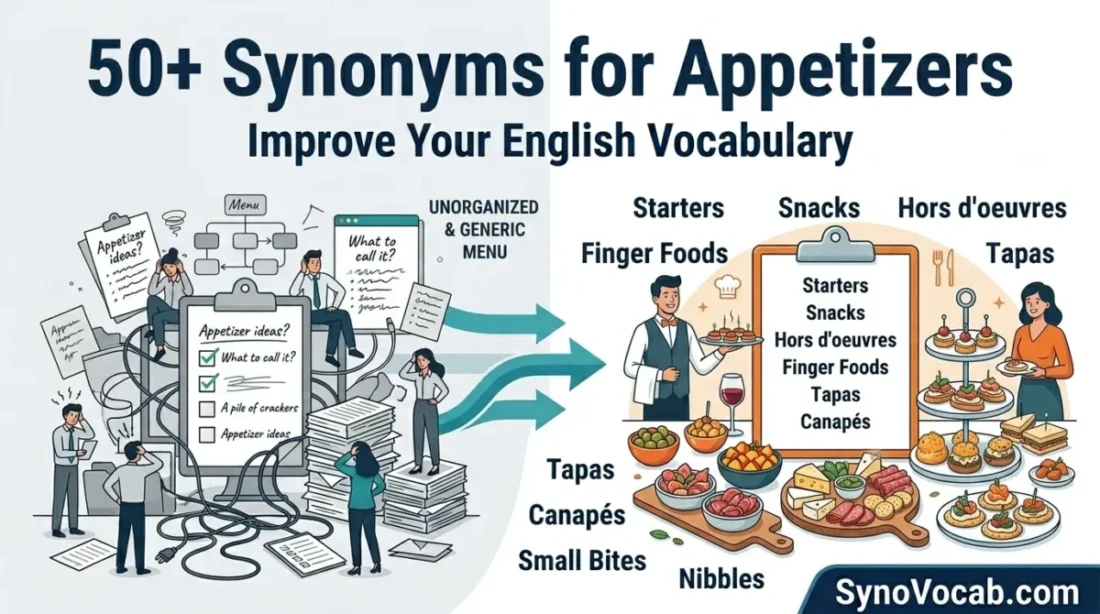
Synonyms for appetizers include starters, snacks, hors d’oeuvres, finger foods, and small bites. These words describe foods served before the main meal.
1. Starters
Meaning: Food served before the main meal.
Examples:
- We ordered starters first.
- The starters tasted delicious.
2. Snacks
Meaning: Small amounts of food eaten between meals.
Examples:
- She packed healthy snacks.
- We enjoyed snacks during the trip.
3. Hors d’oeuvres
Meaning: Small savory foods served before meals.
Examples:
- The party offered hors d’oeuvres.
- Guests loved the hors d’oeuvres.
4. Finger Foods
Meaning: Foods eaten without utensils.
Examples:
- Finger foods were popular.
- Kids enjoyed the finger foods.
5. Small Bites
Meaning: Tiny portions of food.
Examples:
- The menu featured small bites.
- We shared several small bites.
6. Nibbles
Meaning: Small snacks eaten casually.
Examples:
- We enjoyed some nibbles.
- The host served tasty nibbles.
7. Tidbits
Meaning: Small pieces of food.
Examples:
- She offered tidbits before dinner.
- Guests sampled the tidbits.
8. Canapés
Meaning: Decorative bite-sized appetizers.
Examples:
- The wedding served canapés.
- Everyone loved the canapés.
9. Treats
Meaning: Special enjoyable foods.
Examples:
- The treats looked inviting.
- We shared several treats.
10. Bites
Meaning: Small portions of food.
Examples:
- We ordered a few bites.
- The bites disappeared quickly.
11. Tapas
Meaning: Small Spanish dishes.
Examples:
- The restaurant specialized in tapas.
- We ordered many tapas.
12. Antipasti
Meaning: Italian appetizers served before meals.
Examples:
- Antipasti arrived first.
- The antipasti looked fresh.
13. Side Dishes
Meaning: Foods served alongside meals.
Examples:
- We added side dishes.
- The side dishes were excellent.
14. Savories
Meaning: Salty or flavorful snacks.
Examples:
- The table offered savories.
- Guests preferred the savories.
15. Morsels
Meaning: Small pieces of food.
Examples:
- The morsels were tasty.
- We enjoyed every morsel.
16. Light Bites
Meaning: Small, light foods.
Examples:
- The café served light bites.
- We ordered light bites.
17. Preludes
Meaning: Foods served before the main meal.
Examples:
- The preludes were delicious.
- We started with preludes.
18. Samples
Meaning: Small portions for tasting.
Examples:
- Customers received samples.
- The samples tasted great.
19. Tasting Plates
Meaning: Small dishes for sampling.
Examples:
- We shared tasting plates.
- The tasting plates impressed us.
20. Mini Dishes
Meaning: Small versions of meals.
Examples:
- The menu included mini dishes.
- Guests loved the mini dishes.
21. Party Foods
Meaning: Foods served at gatherings.
Examples:
- Party foods filled the table.
- Everyone enjoyed the party foods.
22. Savory Bites
Meaning: Flavorful small foods.
Examples:
- Savory bites were available.
- We ordered savory bites.
23. Crunchies
Meaning: Crispy snack foods.
Examples:
- Kids enjoyed the crunchies.
- The crunchies tasted fresh.
24. Munchies
Meaning: Casual snacks.
Examples:
- We prepared munchies.
- The munchies disappeared quickly.
25. Platters
Meaning: Large trays of food.
Examples:
- The platters looked amazing.
- Guests shared the platters.
26. Appetizer Plates
Meaning: Plates containing starters.
Examples:
- We ordered appetizer plates.
- The appetizer plates arrived quickly.
27. Refreshments
Meaning: Light foods and drinks.
Examples:
- Refreshments were served early.
- Guests enjoyed refreshments.
28. Delicacies
Meaning: Special tasty foods.
Examples:
- The delicacies were impressive.
- Visitors loved the delicacies.
29. Starter Plates
Meaning: Plates served before meals.
Examples:
- Starter plates arrived first.
- We shared starter plates.
30. Small Portions
Meaning: Limited amounts of food.
Examples:
- The restaurant served small portions.
- We sampled several small portions.
31. Snack Foods
Meaning: Foods eaten as snacks.
Examples:
- Snack foods filled the table.
- Everyone enjoyed snack foods.
32. Hors Dishes
Meaning: Small dishes before meals.
Examples:
- Hors dishes were served.
- Guests enjoyed hors dishes.
33. Tasting Bites
Meaning: Tiny food portions for tasting.
Examples:
- The chef offered tasting bites.
- We sampled tasting bites.
34. Food Samples
Meaning: Small pieces for testing flavors.
Examples:
- Food samples were free.
- Customers enjoyed food samples.
35. Party Snacks
Meaning: Snacks served at events.
Examples:
- Party snacks filled the room.
- Everyone enjoyed party snacks.
36. Savory Treats
Meaning: Flavorful special foods.
Examples:
- Savory treats were popular.
- Guests loved savory treats.
37. Entrée Openers
Meaning: Foods before the main course.
Examples:
- Entrée openers arrived first.
- We shared entrée openers.
38. Welcome Bites
Meaning: Foods served to welcome guests.
Examples:
- Welcome bites impressed visitors.
- Guests enjoyed welcome bites.
39. Reception Snacks
Meaning: Foods served at receptions.
Examples:
- Reception snacks looked great.
- Everyone sampled reception snacks.
40. Gourmet Bites
Meaning: High-quality small foods.
Examples:
- Gourmet bites tasted amazing.
- The chef created gourmet bites.
41. Buffet Starters
Meaning: Starter foods on a buffet.
Examples:
- Buffet starters were popular.
- Guests loved buffet starters.
42. Table Snacks
Meaning: Snacks placed on tables.
Examples:
- Table snacks disappeared quickly.
- We enjoyed the table snacks.
43. Cocktail Snacks
Meaning: Snacks served with drinks.
Examples:
- Cocktail snacks were served.
- Guests enjoyed cocktail snacks.
44. Opening Course
Meaning: The first course of a meal.
Examples:
- The opening course was delicious.
- Everyone praised the opening course.
45. First Course
Meaning: The beginning course of a meal.
Examples:
- The first course arrived promptly.
- We enjoyed the first course.
46. Mini Snacks
Meaning: Very small snack foods.
Examples:
- Mini snacks filled the tray.
- Kids loved mini snacks.
47. Tasty Bites
Meaning: Delicious small foods.
Examples:
- Tasty bites were served.
- Guests enjoyed tasty bites.
48. Starter Snacks
Meaning: Snacks served before meals.
Examples:
- Starter snacks arrived quickly.
- We shared starter snacks.
49. Savory Starters
Meaning: Flavorful foods before meals.
Examples:
- Savory starters looked delicious.
- Guests loved savory starters.
50. Pre-Meal Snacks
Meaning: Foods eaten before the main meal.
Examples:
- Pre-meal snacks were available.
- Everyone enjoyed pre-meal snacks.
FAQs
1. What are appetizers?
Appetizers are small dishes served before the main meal.
2. What is the most common synonym for appetizers?
“Starters” is one of the most common synonyms.
3. Are appetizers and snacks the same?
Not always. Appetizers are usually served before meals, while snacks can be eaten anytime.
4. What are finger foods?
Finger foods are appetizers that can be eaten without utensils.
5. Why learn synonyms for appetizers?
They help improve vocabulary, food writing, blogging, and everyday communication.
Conclusion
Learning synonyms for appetizers can make your writing and speaking more interesting, especially when discussing food, restaurants, recipes, and events. Instead of repeating the same word, you can choose alternatives that better fit the situation.
Practice these words in blogs, menus, essays, emails, and daily conversations. The more you use them, the more natural and professional your English vocabulary will become.

I am Rana Fareed, an educator and content writer with an MPhil in Business Administration and an LLB (Law) degree. I write on current affairs, English language topics, and synonyms, simplifying complex ideas for everyday readers. Alongside teaching, I am passionate about helping people improve their knowledge and communication skills.