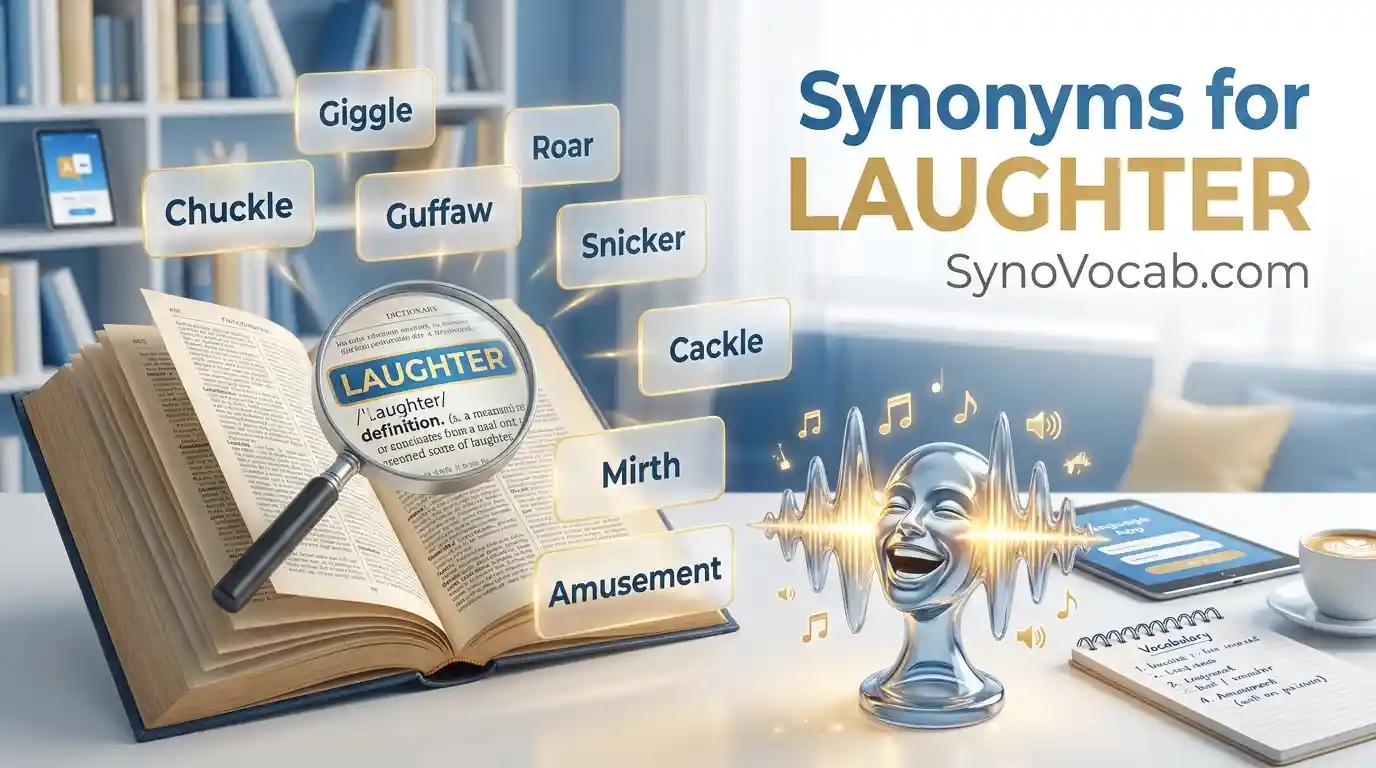
Synonyms for laughter include chuckle, giggle, chortle, guffaw, cackle, mirth, hilarity, and merriment, depending on the sound, emotion, and situation.
Laughter can fill a room, soften an awkward moment, or reveal an emotion that words cannot express. For example, a quiet chuckle communicates something very different from a roaring guffaw.
Laughter means the sounds or physical reactions people make when they find something funny, joyful, surprising, or uncomfortable. It may be loud and uncontrolled, soft and private, warm and friendly, or even bitter and mocking.
Learning synonyms for laughter helps students avoid repetition, gives writers more descriptive choices, and allows bloggers to create vivid scenes.
What Does Laughter Mean?
Laughter is the sound or action produced when someone laughs. It usually expresses happiness or amusement, but it can also show nervousness, embarrassment, disbelief, or scorn.
Common examples include:
- Her laughter brightened the quiet room.
- The joke caused a sudden burst of laughter.
- Nervous laughter followed his unexpected question.
Best Synonyms for Laughter
Not every alternative describes the same kind of laugh. Some words indicate a quiet sound, while others suggest loudness, intensity, mockery, or uncontrollable amusement. The right choice depends on the emotion and context.
1. Laugh
Meaning: The sound or act of laughing.
Example: His warm laugh made everyone relax.
2. Laughing
Meaning: The action of expressing amusement through laughter.
Example: Their laughing continued throughout the journey.
3. Chuckle
Meaning: A quiet, gentle expression of amusement.
Example: Her clever reply earned a chuckle.
4. Giggle
Meaning: A light, repeated, often playful laugh.
Example: The children shared a secret giggle.
5. Chortle
Meaning: A pleased laugh combining a chuckle and snort.
Example: He gave a delighted chortle at the result.
6. Guffaw
Meaning: A very loud and uncontrolled laugh.
Example: His guffaw echoed across the hallway.
7. Cackle
Meaning: A loud, sharp, broken-sounding laugh.
Example: A sudden cackle came from the audience.
8. Titter
Meaning: A short, restrained laugh caused by amusement or embarrassment.
Example: Her mistake produced a nervous titter.
9. Snicker
Meaning: A partly suppressed and sometimes disrespectful laugh.
Example: A snicker rose from the back row.
10. Snigger
Meaning: A secretive laugh, usually at another person.
Example: He heard a cruel snigger behind him.
11. Cachinnation
Meaning: Loud or excessive laughter.
Example: Wild cachinnation erupted after the performance.
12. Hilarity
Meaning: Extreme amusement accompanied by lively laughter.
Example: The comedian’s story caused complete hilarity.
13. Mirth
Meaning: Happiness expressed through laughter and enjoyment.
Example: The room was filled with mirth.
14. Merriment
Meaning: Cheerful enjoyment involving laughter and celebration.
Example: Their merriment lasted well past midnight.
15. Amusement
Meaning: Enjoyment produced by something funny or entertaining.
Example: She watched the confusion with amusement.
16. Glee
Meaning: Strong delight often expressed through laughter.
Example: The children shouted with glee.
17. Jocularity
Meaning: A cheerful mood marked by joking and laughter.
Example: His jocularity lifted everyone’s spirits.
18. Jollity
Meaning: Lively cheerfulness and friendly laughter.
Example: Holiday jollity filled the family home.
19. Levity
Meaning: Light-hearted humor in a serious situation.
Example: Her joke brought welcome levity to the meeting.
20. Cheerfulness
Meaning: A happy manner that may include smiling and laughter.
Example: Her cheerfulness spread through the office.
21. Belly Laugh
Meaning: Deep, powerful laughter coming from the stomach.
Example: The story gave Grandpa a belly laugh.
22. Hearty Laugh
Meaning: A strong, open, and sincere laugh.
Example: She responded with a hearty laugh.
23. Horse Laugh
Meaning: A loud, rough laugh expressing ridicule.
Example: His suggestion received a rude horse laugh.
24. Boisterous Laughter
Meaning: Noisy, energetic, and cheerful laughter.
Example: Boisterous laughter poured from the dining room.
25. Peal of Laughter
Meaning: A long, loud burst of laughter.
Example: A peal of laughter interrupted the speaker.
26. Burst of Laughter
Meaning: Laughter that begins suddenly.
Example: His comment caused a burst of laughter.
27. Fit of Laughter
Meaning: A period of difficult-to-control laughter.
Example: She collapsed into a fit of laughter.
28. Gale of Laughter
Meaning: A powerful outburst of group laughter.
Example: Gales of laughter swept through the theater.
29. Roar of Laughter
Meaning: Extremely loud laughter from one or more people.
Example: A roar of laughter followed the punchline.
30. Howl of Laughter
Meaning: Loud, prolonged, and uncontrolled laughter.
Example: His imitation produced howls of laughter.
31. Shriek of Laughter
Meaning: A sudden, high-pitched laugh.
Example: She released a shriek of laughter.
32. Scream of Laughter
Meaning: A very loud expression of intense amusement.
Example: Screams of laughter came from the playground.
33. Whoop
Meaning: A loud cry showing excitement or amusement.
Example: He gave a whoop at the hilarious ending.
34. Hoot
Meaning: A loud, short laugh or amused cry.
Example: Her costume drew hoots from her friends.
35. Crack-Up
Meaning: An informal episode of uncontrollable laughter.
Example: His impression caused a complete crack-up.
36. Ripple of Laughter
Meaning: Gentle laughter spreading through a group.
Example: A ripple of laughter crossed the classroom.
37. Wave of Laughter
Meaning: Laughter moving gradually through an audience.
Example: A wave of laughter followed her remark.
38. Nervous Laugh
Meaning: Laughter caused by anxiety or discomfort.
Example: He gave a nervous laugh before answering.
39. Uneasy Laugh
Meaning: A laugh showing uncertainty or embarrassment.
Example: An uneasy laugh escaped her lips.
40. Forced Laugh
Meaning: Laughter produced without genuine amusement.
Example: She offered a forced laugh at his joke.
41. Fake Laugh
Meaning: Deliberately insincere laughter.
Example: Everyone recognized his fake laugh.
42. Hollow Laugh
Meaning: Laughter that sounds empty or joyless.
Example: He answered with a hollow laugh.
43. Dry Laugh
Meaning: A brief laugh showing little genuine pleasure.
Example: She gave a dry laugh at the excuse.
44. Bitter Laugh
Meaning: Laughter expressing pain, anger, or disappointment.
Example: A bitter laugh followed his rejection.
45. Derisive Laugh
Meaning: Laughter intended to show contempt.
Example: The proposal received a derisive laugh.
46. Mocking Laugh
Meaning: Laughter used to imitate or ridicule someone.
Example: His mocking laugh upset the young performer.
47. Scornful Laugh
Meaning: Laughter showing strong disrespect or disbelief.
Example: She answered the accusation with a scornful laugh.
48. Suppressed Laugh
Meaning: Laughter someone tries to hold back.
Example: He hid a suppressed laugh behind his hand.
49. Stifled Laugh
Meaning: A laugh stopped before becoming fully audible.
Example: A stifled laugh broke the silence.
50. Smothered Laugh
Meaning: Laughter deliberately made quiet or hidden.
Example: She buried a smothered laugh in her scarf.
Synonyms for Laughter Based on Emotion
For joyful laughter, use mirth, merriment, glee, hilarity, jollity, or amusement. These choices create a positive, cheerful feeling.
For uncomfortable emotions, choose nervous laugh, uneasy laugh, hollow laugh, or bitter laugh. For unkind laughter, snicker, snigger, derisive laugh, mocking laugh, and scornful laugh are more accurate.
Synonyms for Quiet and Loud Laughter
A chuckle, giggle, titter, suppressed laugh, or stifled laugh suits a quiet scene. These terms are useful when a character wants to remain polite or unnoticed.
For loud laughter, use guffaw, cackle, belly laugh, roar of laughter, gale of laughter, or howl of laughter. They make a scene feel energetic and vivid.
Synonyms for Laughter in Formal Writing
In essays and formal descriptions, amusement, mirth, merriment, hilarity, levity, and jocularity work well. Expressions such as crack-up and fake laugh are more conversational and suit informal writing, dialogue, or blog content.
Laughter vs. Similar Words
| Word | Meaning | Best Used For |
|---|---|---|
| Chuckle | A quiet, gentle laugh | Mild amusement |
| Giggle | A light, repeated laugh | Playful situations |
| Guffaw | A loud, uncontrolled laugh | Strong amusement |
| Cackle | A sharp, broken laugh | Wild or unpleasant laughter |
| Snicker | A hidden, disrespectful laugh | Mockery or secret amusement |
Related Searches
- Another word for laughter
- Words similar to laughter
- Different words for laughing
- Laughter meaning and examples
- Synonyms for loud laughter
- Synonyms for happy laughter
- Formal words for laughter
- Types of laughter in English
- Descriptive words for laughter
- Alternatives to laughter in writing
Frequently Asked Questions
What is the closest synonym for laughter?
Laugh or laughing is the closest general alternative. More descriptive choices include chuckle, giggle, guffaw, and cackle.
What is a formal word for laughter?
Mirth is a suitable formal word for cheerful laughter. Hilarity, merriment, and jocularity are also useful in formal descriptions.
What word describes loud laughter?
Guffaw describes a loud, uncontrolled laugh. You can also use belly laugh, roar of laughter, or howl of laughter.
What word describes quiet laughter?
A chuckle is a quiet, gentle laugh. A titter, giggle, or suppressed laugh may also fit, depending on the emotion.
Are mirth and laughter exactly the same?
Not exactly. Laughter refers to the sound or action, while mirth describes the happiness and amusement that produce it.
Conclusion
Learning different words for laughter makes vocabulary richer and communication more expressive.
Instead of using the same general word repeatedly, you can choose an alternative that shows volume, emotion, intention, or intensity.
A chuckle creates a different picture from a guffaw, while a nervous laugh reveals more than simple amusement.
Practice using these terms in essays, emails, blog posts, stories, and conversations. The more carefully you choose your words, the more clearly your readers and listeners will understand the moment you are describing.

I am Abubakar, an educator and content writer with a Master’s degree in English Language. I write about English language, vocabulary, and educational topics, simplifying complex concepts for everyday readers. Alongside my passion for teaching and learning, I focus on creating helpful and engaging content that improves knowledge, communication skills, and language understanding.