Have you ever worried about school, work, money, or family? Everyone has thoughts or problems that stay on their mind. These thoughts are often called concerns.
The word concerns means worries, problems, interests, or things that matter to someone. But using the same word many times can make writing feel repetitive. That’s why learning synonyms of concerns is very useful.
These words help students, bloggers, writers, and daily English users express ideas more clearly. They also improve speaking, essays, emails, and conversations. In this guide, you will learn synonyms of concerns with simple meanings and easy examples.
⚡ Quick Answer
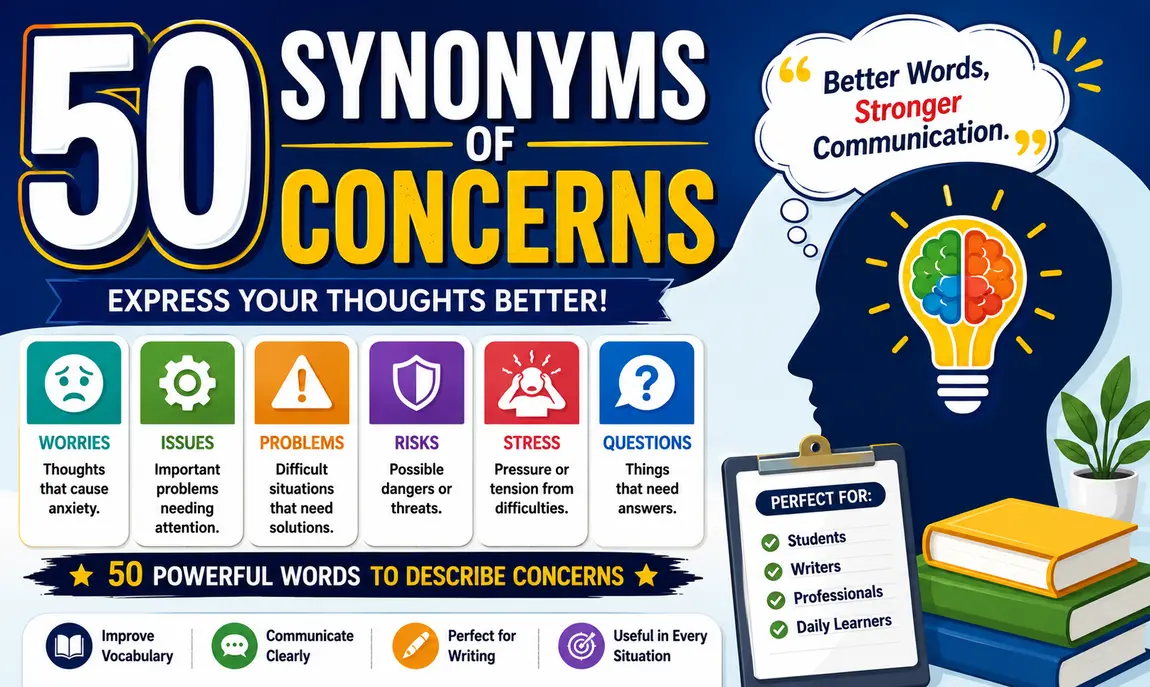
Synonyms of concerns include worries, issues, problems, fears, and matters. These words describe things that trouble or interest people.
1. Worries
Meaning: Thoughts that make you nervous.
Examples:
- I have many worries today.
- Her worries kept growing.
2. Issues
Meaning: Problems or important topics.
Examples:
- We discussed the issues.
- The issue needs attention.
3. Problems
Meaning: Difficult situations.
Examples:
- He solved the problems.
- I have work problems.
4. Fears
Meaning: Strong feelings of worry.
Examples:
- She shared her fears.
- His fears felt real.
5. Matters
Meaning: Important things.
Examples:
- Family matters are important.
- We discussed serious matters.
6. Troubles
Meaning: Difficult or stressful situations.
Examples:
- He faced many troubles.
- Money troubles hurt him.
7. Anxiety
Meaning: A feeling of nervous worry.
Examples:
- Anxiety kept her awake.
- He felt anxiety before exams.
8. Stress
Meaning: Mental pressure or worry.
Examples:
- Work stress is common.
- She felt stress daily.
9. Doubts
Meaning: Feelings of uncertainty.
Examples:
- I have doubts today.
- His doubts disappeared later.
10. Care
Meaning: Attention or worry about something.
Examples:
- She showed great care.
- He cares deeply.
11. Questions
Meaning: Things needing answers.
Examples:
- I have many questions.
- Her questions were important.
12. Difficulties
Meaning: Hard situations.
Examples:
- He faced difficulties.
- School difficulties stressed her.
13. Challenges
Meaning: Hard things to deal with.
Examples:
- Life brings challenges.
- She accepted the challenge.
14. Risks
Meaning: Chances of danger or loss.
Examples:
- The risks were high.
- He avoided risks.
15. Burdens
Meaning: Heavy worries or duties.
Examples:
- Money became a burden.
- She carried many burdens.
16. Headaches
Meaning: Annoying problems.
Examples:
- Work caused headaches.
- This issue is a headache.
17. Complications
Meaning: Problems that make things harder.
Examples:
- Health complications appeared.
- The plan had complications.
18. Responsibilities
Meaning: Duties needing attention.
Examples:
- Parents have responsibilities.
- He handled responsibilities well.
19. Interest
Meaning: Something important to someone.
Examples:
- Education interests her.
- It became public interest.
20. Unease
Meaning: Slight worry or discomfort.
Examples:
- He felt unease today.
- The silence caused unease.
21. Alarm
Meaning: Sudden worry or fear.
Examples:
- The news caused alarm.
- Parents felt alarm quickly.
22. Panic
Meaning: Strong fear or worry.
Examples:
- Panic spread quickly.
- She tried to stay calm.
23. Distress
Meaning: Great sadness or worry.
Examples:
- The news caused distress.
- He felt emotional distress.
24. Nervousness
Meaning: Feeling worried or uneasy.
Examples:
- Nervousness affected him.
- She smiled nervously.
25. Misgivings
Meaning: Feelings of doubt or worry.
Examples:
- I have misgivings.
- She felt unsure.
26. Suspicion
Meaning: Feeling something is wrong.
Examples:
- He had suspicions.
- The event caused suspicion.
27. Apprehension
Meaning: Fear about the future.
Examples:
- She felt apprehension.
- He worried about results.
28. Insecurity
Meaning: Lack of confidence or safety.
Examples:
- Insecurity affected him.
- She felt insecure today.
29. Doubtfulness
Meaning: Feeling unsure.
Examples:
- Doubtfulness slowed him down.
- She felt uncertain.
30. Objections
Meaning: Reasons for disagreement.
Examples:
- He raised objections.
- Her objections were valid.
31. Complaint
Meaning: Expression of dissatisfaction.
Examples:
- He made a complaint.
- Customers had complaints.
32. Pressure
Meaning: Strong stress or demand.
Examples:
- School pressure increased.
- He felt pressure daily.
33. Fearfulness
Meaning: Being full of fear.
Examples:
- Fearfulness affected her.
- He stayed worried.
34. Tension
Meaning: Mental stress or strain.
Examples:
- Tension filled the room.
- He felt tension.
35. Worrying Thoughts
Meaning: Thoughts causing concern.
Examples:
- Worrying thoughts returned.
- She stayed awake.
36. Pain Points
Meaning: Specific problems.
Examples:
- Customers shared pain points.
- We solved the issue.
37. Hardships
Meaning: Difficult life situations.
Examples:
- They faced hardships.
- Life hardships changed him.
38. Setbacks
Meaning: Problems causing delays.
Examples:
- We faced setbacks.
- The project slowed down.
39. Obstacles
Meaning: Things blocking progress.
Examples:
- He overcame obstacles.
- Life has obstacles.
40. Threats
Meaning: Possible dangers.
Examples:
- Cyber threats increased.
- The threats worried people.
41. Hazards
Meaning: Dangerous situations.
Examples:
- Workers faced hazards.
- Safety hazards existed there.
42. Grievances
Meaning: Complaints or unfair problems.
Examples:
- Workers shared grievances.
- The complaint was serious.
43. Problems of Interest
Meaning: Important issues to discuss.
Examples:
- We discussed important problems.
- The topic gained attention.
44. Emotional Burdens
Meaning: Heavy emotional worries.
Examples:
- Emotional burdens hurt him.
- She stayed stressed.
45. Weak Points
Meaning: Areas needing improvement.
Examples:
- We found weak points.
- The system had weaknesses.
46. Difficult Matters
Meaning: Serious problems or topics.
Examples:
- They discussed difficult matters.
- The topic felt sensitive.
47. Serious Questions
Meaning: Important concerns needing answers.
Examples:
- Serious questions remained.
- He asked difficult questions.
48. Mental Load
Meaning: Stress from responsibilities.
Examples:
- Parents carry mental load.
- She felt exhausted.
49. Emotional Stress
Meaning: Stress caused by feelings.
Examples:
- Emotional stress affected him.
- She needed rest.
50. Care Points
Meaning: Things needing attention.
Examples:
- Health care points matter.
- Parents discussed safety.
Why Learning Synonyms of Concerns Matters
Learning different ways to say concerns can make your English sound smarter and more natural. Instead of repeating the same word, you can use better vocabulary in essays, blogs, emails, and conversations.
For example, a student may talk about academic worries, while a business writer may discuss customer issues or public concerns. Using the right synonym helps readers understand your message more clearly.
These words are also useful in professional communication. In meetings or formal writing, words like issues, matters, and challenges sound more polished than repeating concerns again and again.
Improving vocabulary also helps with:
- Better essay writing
- Stronger blog content
- Clear workplace communication
- More confident English speaking
- Improved SEO writing skills
The more synonyms you practice, the easier it becomes to express emotions, opinions, and problems naturally.
FAQs
1. What does concerns mean?
It means worries, problems, or important matters.
2. What is the simplest synonym for concerns?
“Worries” is the easiest synonym.
3. Can concerns also mean interests?
Yes, it can mean something important to someone.
4. Are concerns always negative?
No, sometimes they simply mean important topics.
5. Why learn synonyms of concerns?
They improve writing, speaking, and communication skills.
Conclusion
Learning synonyms of concerns helps you express worries, problems, and important matters more clearly. It improves writing, speaking, and communication.
Use these words in essays, blogs, emails, and daily conversations. Practice them often. Over time, your vocabulary will grow, and your English will become stronger and more natural.

I am Rana Fareed, an educator and content writer with an MPhil in Business Administration and an LLB (Law) degree. I write on current affairs, English language topics, and synonyms, simplifying complex ideas for everyday readers. Alongside teaching, I am passionate about helping people improve their knowledge and communication skills.